Model the ecosystem
Ground operations, air traffic, fleet design, and vehicle constraints become one operational simulation.
AIAA 2020 · Best paper
Simulation-driven analysis of the fleet, infrastructure, and traffic policies that determine whether an on-demand aerial network can scale.
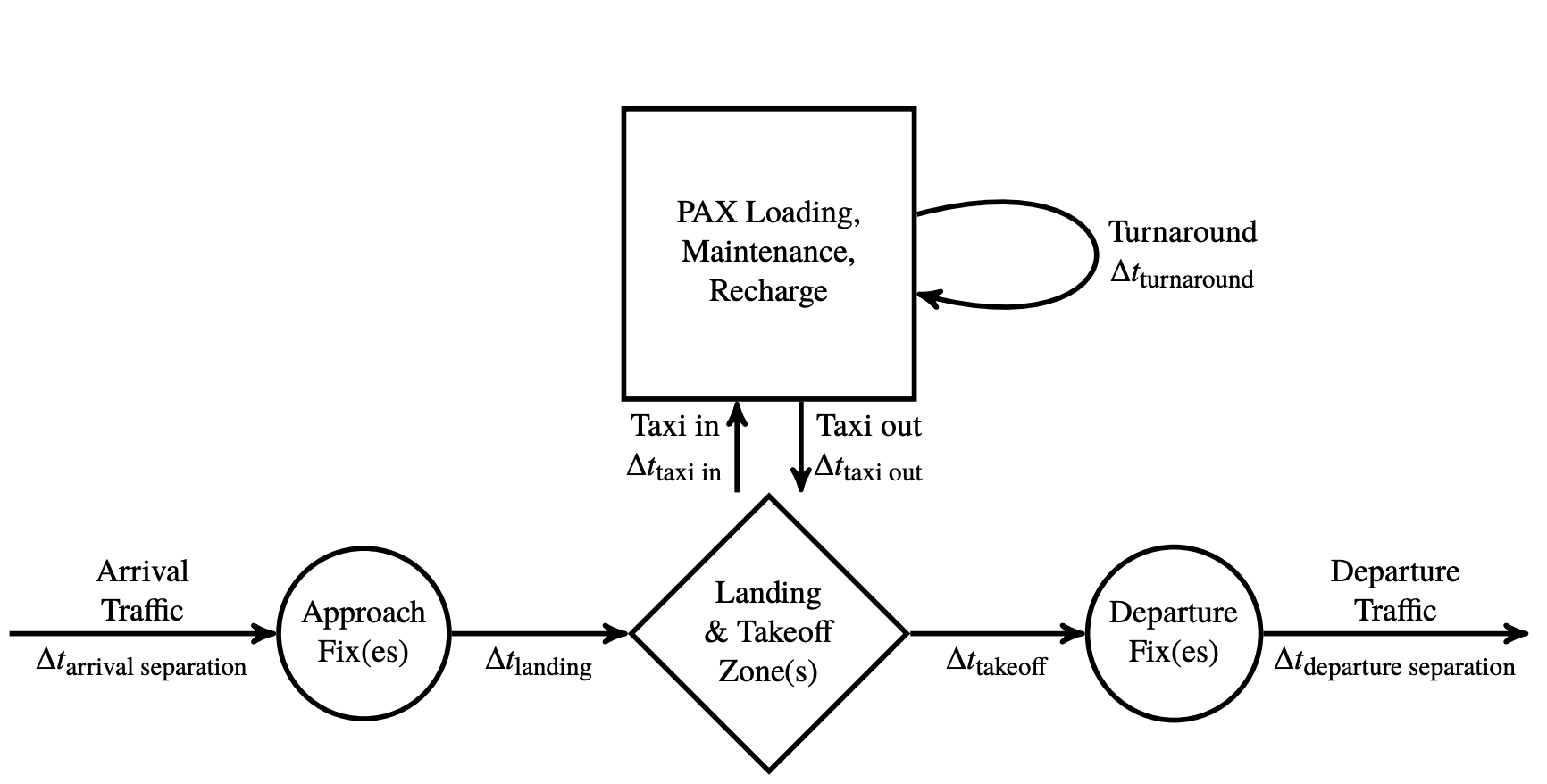
Operational feasibility in urban air mobility depends on more than aircraft performance. Ground infrastructure, fleet size, turnaround time, traffic separation, demand, and dispatch policies interact as one system of systems.
This work builds an operational model for that ecosystem and probes it across demand profiles and design choices. The goal is not a single forecast, but a map of which decisions materially influence capacity and throughput.
Which design choices actually govern the performance of an on-demand aerial transportation network?
The analysis follows traffic through arrival separation, approach fixes, landing and takeoff zones, passenger loading, maintenance, charging, turnaround, and departure. Simulation then measures how infrastructure, vehicle, fleet, and management choices affect the network under different demand conditions.
Ground operations, air traffic, fleet design, and vehicle constraints become one operational simulation.
Scenarios sweep plausible demand profiles and ecosystem parameters to expose bottlenecks and sensitivities.
Feasibility and scalability emerge from how many trips the complete system can safely sustain.
Once basic infrastructure and fleet choices are sensible, management decisions become the stronger lever.
Performance remains relatively robust to ground-infrastructure choices when those choices stay within sensible bounds.
Fleet and traffic management policies exert a stronger influence on ecosystem capacity and throughput.
The sensitivity analysis supports practical guidance for fleet, vehicle, infrastructure, and operating-policy decisions.
AIAA Best Paper Award · 2020
AIAA AVIATION Forum · 2020